Shop Towel Management: The Hidden Risks Most Facilities Overlook
Compact in size, light in weight, but heavy-duty in nature, shop towels are one of the most commonly used tools across automotive and industrial environments.
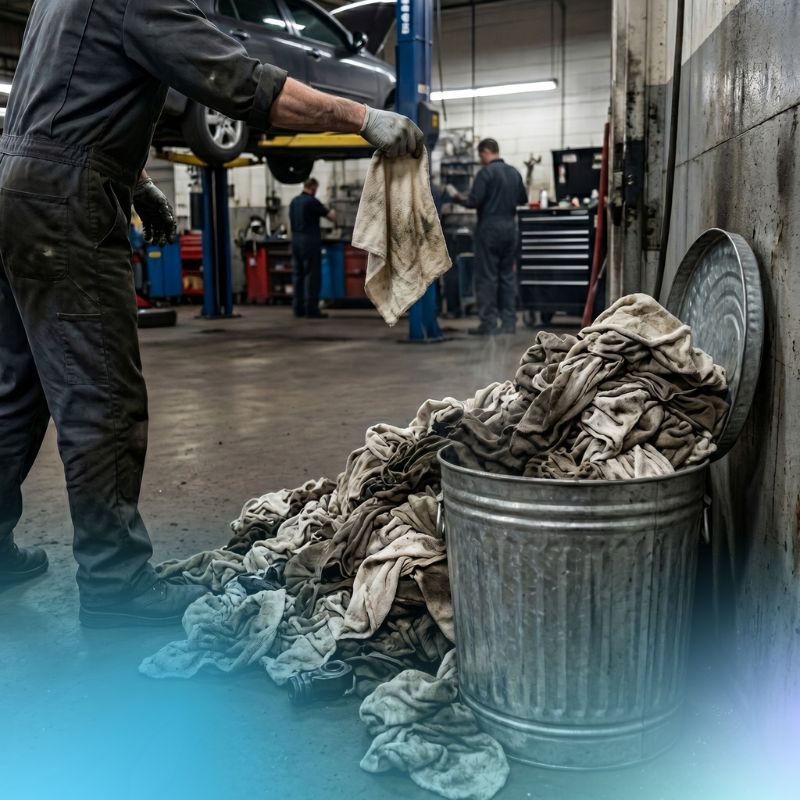
Throughout a typical day, they handle everything from wiping down equipment to managing oils, solvents, and spills, often in high volumes across a single facility.
At that scale, how those towels are handled, stored, and processed becomes part of daily operations, and when that approach isn’t consistent, issues can start to build.
What It Takes to Manage Towels Internally
Shop towels are a non-mechanical tool, and because of that, they’re often seen as something simple to manage in-house.
The assumption is usually straightforward—store them, wash them, and put them back into use.
In practice, managing towels internally becomes more involved once you consider the volume being used and the types of materials they come into contact with.
If towels are purchased and cleaned in-house, the process extends into how they’re cleaned, maintained, and returned to use. That means having the right laundering equipment, the space to operate it, and someone responsible for keeping everything running consistently.
That also requires:
Thorough cleaning — ensuring residual materials aren’t carried back into use
Timely replacement — as wear and buildup can affect performance and impact the surfaces being worked on
Ongoing equipment maintenance — since keeping laundering equipment running properly adds time, cost, and responsibility to the operation
With the volume of towels moving through a facility daily, it also requires enough inventory on hand to keep clean towels available while others are being processed—without slowing down the work they support.
What Consistent Towel Management Looks Like
Shop towels are a small part of the overall operation, and because of that, they often don’t get much attention day-to-day.
The reality is, once you look at how they’re handled, cleaned, and kept in rotation, they rely on a level of structure to stay consistent as volume builds.
In practice, a managed system takes care of that behind the scenes:
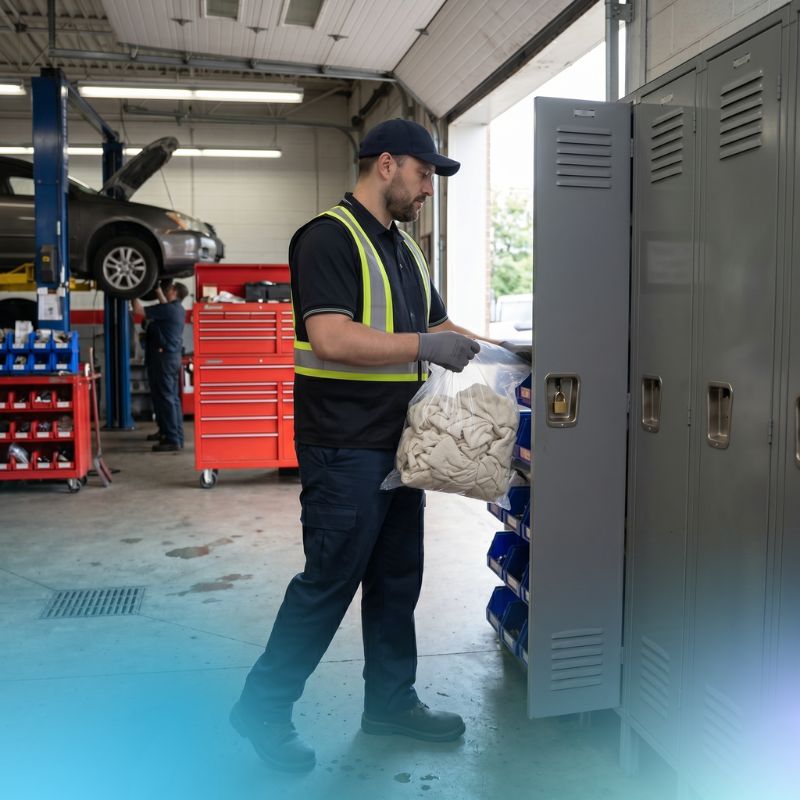
Scheduled exchange — soiled towels are picked up and replaced with clean ones on a set schedule, keeping a steady rotation in place without requiring internal handling
Inventory management — towel quantities are monitored and adjusted over time, ensuring there’s always enough on hand without overstocking or running short
Quality control — towels that are no longer suitable for use are removed from circulation, so what’s returned is consistently usable
Specialized laundering— processing is handled using methods designed for industrial materials, including the right temperatures, load volumes, and cleaning agents
Reduced strain on operations— without the need to store, wash, or manage towels internally, facilities free up space, time, and attention that can be directed elsewhere
With that structure in place, towel management becomes predictable—rather than something that needs to be monitored, adjusted, or worked around throughout the day.
Shop towels may seem like a small part of the overall operation, but they tend to be woven into more tasks than most realize. As you look more closely at how they’re handled, cleaned, and kept in circulation, they become another process that needs to be managed.
What starts as something simple can gradually take on more oversight than expected, especially as volume increases and consistency becomes more important.
With the right system in place, that responsibility shifts from something that needs to be tracked and adjusted internally to something that runs consistently inthe background.
It’s worth stepping back and considering how much time, space, and coordination goes into keeping that process running smoothly day-to-day. If simplifying that process is something you’re exploring, our team is always here to help.
Wondering about the cleanliness of cloth roll towels you see in public restrooms? Cloth roll towels are actually quite hygienic, and offer certain advantages over paper towels and air hand dryers.
In facility services, multiple touch points aren’t just convenient, they’re strategic. When support is accessible and responsive, small problems don’t turn into costly disruptions.