Mops, Microbes, and Misconceptions: How Clean Are Your Mops?
When we think about cleanliness, we tend to focus on what we can see: shiny floors, polished surfaces, that unmistakable “just cleaned” feeling. But one detail often goes unnoticed: the tools doing the cleaning.
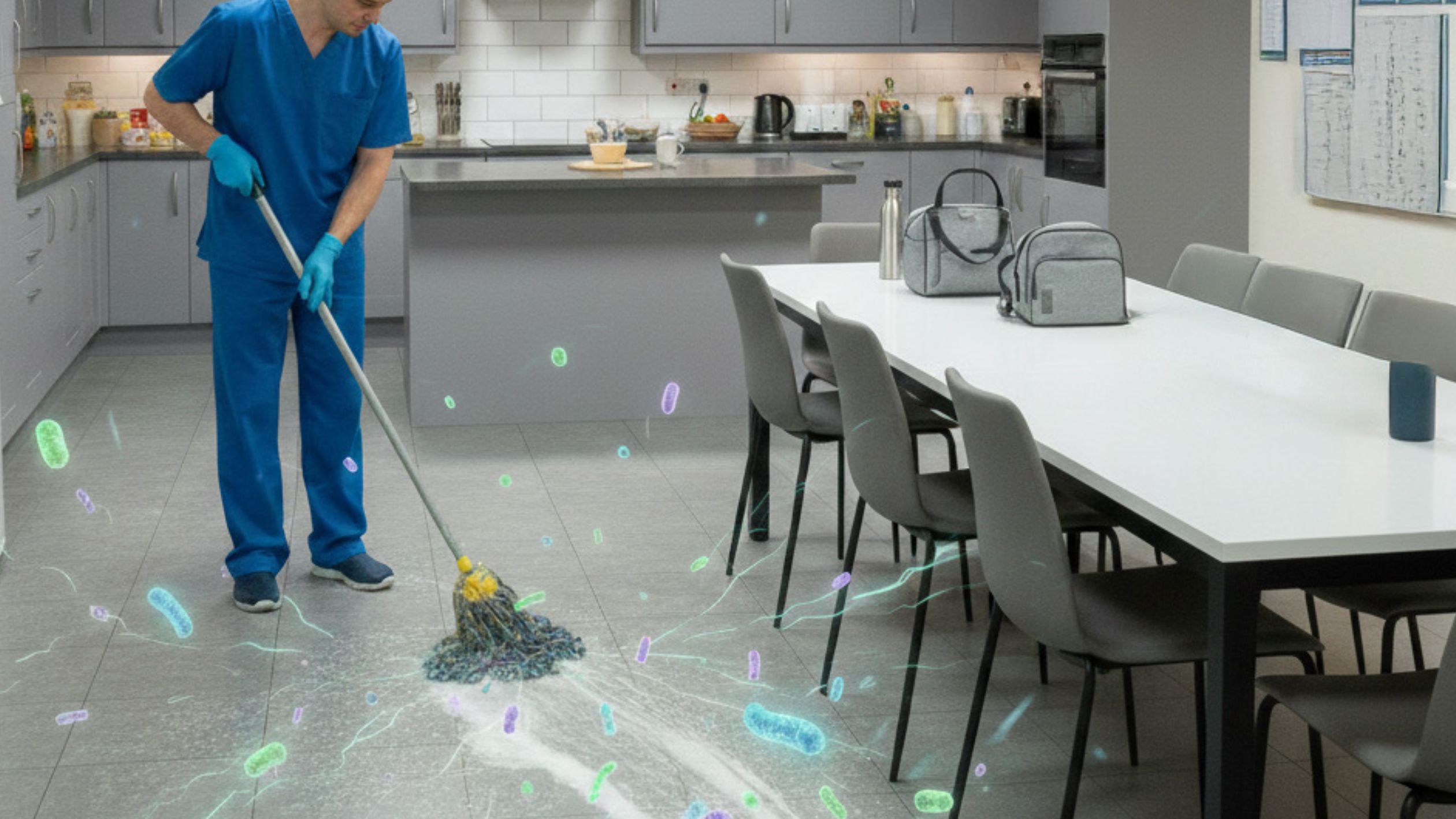
Mops are designed to absorb moisture, debris, and spills. Without proper care, that same absorbency can trap contaminants and carry them from one space to another. A mop that looks clean on the surface may be hiding a very different story inside.
Why Mop Hygiene Matters for Your Facility
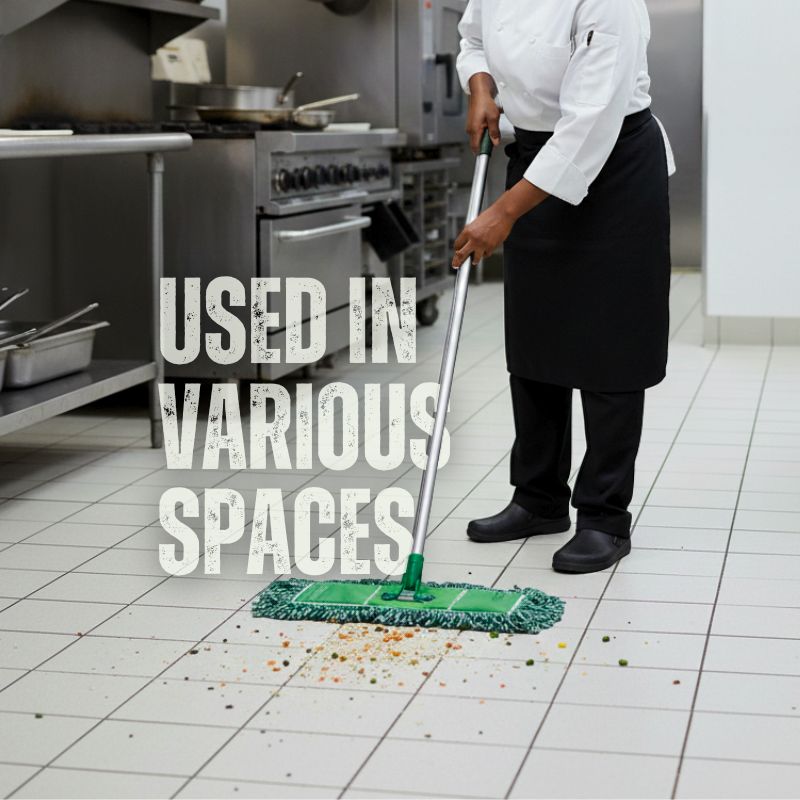
Mops are often used in entrances and lobby areas, but some facilities also need them for washrooms, kitchens, staff rooms, or even active workstations. Each space carries its own types of dirt and bacteria. Proper mop usage and maintenance reduces the risk of spreading contaminants. Even when floors appear spotless, they can harbour residues, microbes, and odours if the tools used for cleaning are not maintained properly.
The Hidden Hygiene Risks in Your Mop
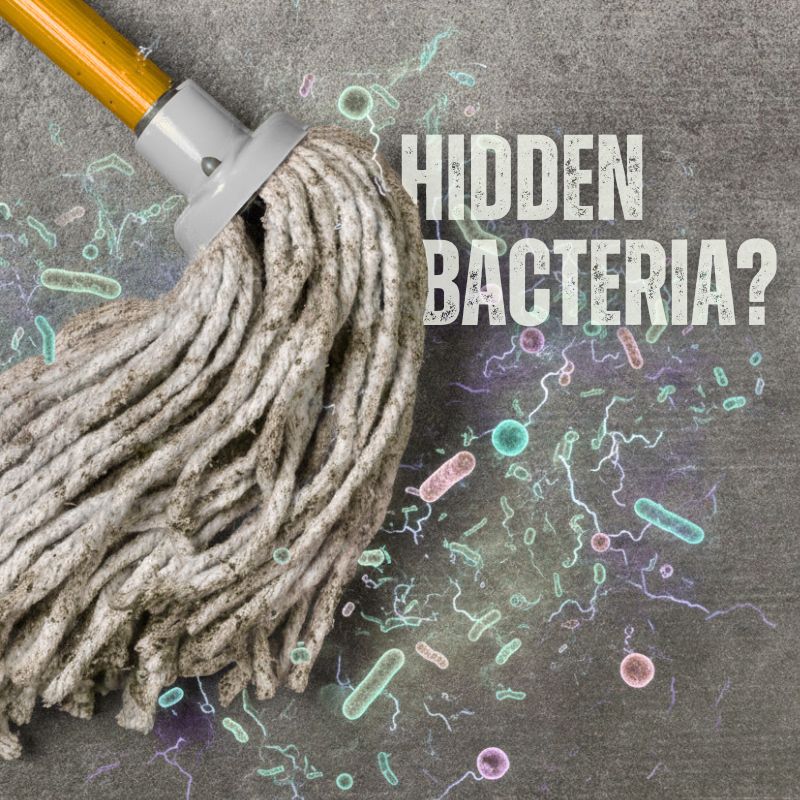
Mops are excellent at picking up soil and moisture but those same traits can make them a home for microbes. Even when a mop looks clean, tiny organisms can persist deep within the fibres, quietly transferring from one surface to another.
Research has found that mop material can influence microbial removal. Microfiber mops, for instance, often leave fewer bacteria behind than traditional cotton string mops (Rutala et al., 2022; UMass Lowell, 2015). Other evaluations of mopping methods have shown that not all cleaning techniques achieve the same level of hygiene (InfectionControl.Tips, 2023).
Microbes can cling to mop fibres, especially when damp, and may transfer between spaces long after visible dirt has been removed. Recognizing this helps facilities think more intentionally about how tools are used, stored, and maintained.
Common Mop Misconceptions
Even experienced cleaning teams can fall into a few common traps when it comes to mop hygiene. Some assumptions feel obvious but can quietly undermine your efforts.
If it looks or smells clean, it is clean. A mop may appear spotless or have a “fresh” scent, but microbes can persist deep within the fibres. Visual cleanliness is different from hygienic cleanliness.
Hot water alone kills everything. Rinsing or soaking in hot water may reduce some bacteria, but it does not remove all microbes or residues. Proper laundering with the right detergents and temperatures is essential.
One mop works for every area. Different spaces, such as lobbies, kitchens, washrooms, workstations, have different contaminants. Using the same mop across all areas can increase the risk of cross-contamination if the mop is not cared for correctly.
All mop cleaning methods are equal. Not all techniques or materials achieve the same hygiene outcomes. As mentioned earlier, studies show microfiber often reduces microbial residue more effectively than traditional cotton mops (Rutala et al., 2022).
What Proper Mop Care Should Look Like
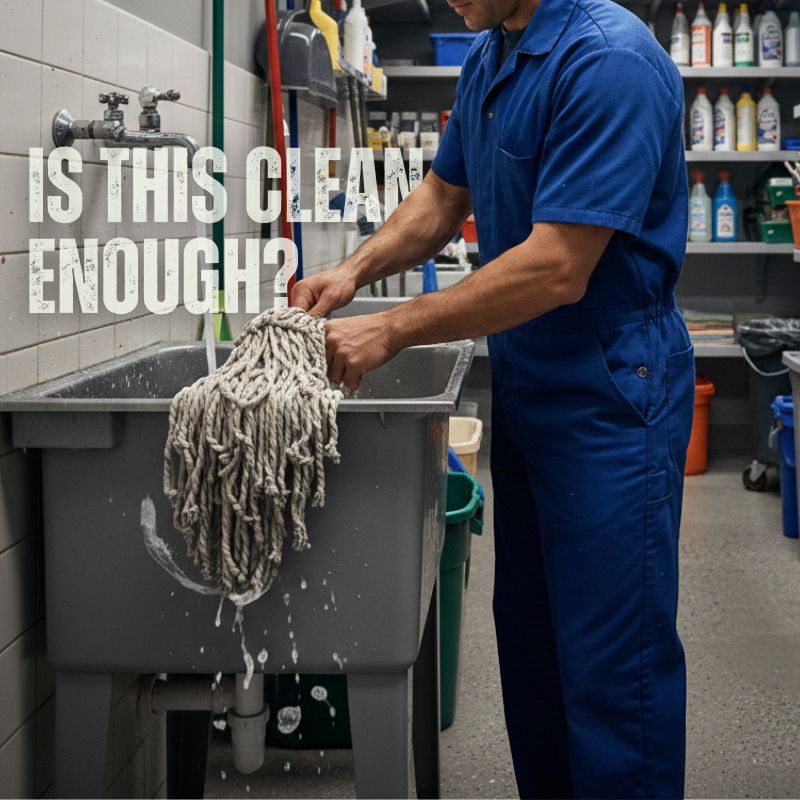
Keeping a mop truly clean takes more than a quick rinse. The right care ensures it removes dirt and microbes instead of spreading them.
Some key practices for maintaining hygienic mops include:
Separate mops by area: Washrooms, kitchens, entrances, and workstations all carry different contaminants. Using dedicated mops for each space reduces the risk of cross-contamination.
Regular laundering: Mops should be washed frequently, at proper temperatures, and with detergents designed to remove both visible soil and microbial residue.
Proper storage: After use, mops should be rinsed, wrung out, and stored to dry completely. Damp storage encourages microbial growth.
Replacement when worn: Even with laundering, mop fibres degrade over time. Worn or frayed mops are less effective and harder to clean thoroughly.
Following these basic practices goes a long way toward ensuring that a mop is more than just “visibly clean.” It becomes a tool that supports a hygienic environment.
Mops are a key tool for keeping your facility looking clean, but how they are maintained determines whether cleanliness goes beyond what is visible to what is truly hygienic. Even the best cleaning routines can fall short if mops are not properly managed, maintained, or matched to the task. Understanding how mops interact with different spaces, how microbes can persist, and how proper care makes a difference is the first step toward creating a hygienic environment that protects people and supports your operations.
Curious about adding a mop program to support your facility’s needs? Reach out to our team, we are always happy to help.
References
Rutala WA, Weber DJ, et al. Microbiologic Evaluation of Microfiber vs Traditional Mops. SPICE, University of North Carolina, 2022. PDF link
Microfiber Mop Case Study. University of Massachusetts Lowell, 2015. PDF link
Do All Manual Floor Mopping Methods Give the Same Hygiene Outcomes? InfectionControl.Tips, March 2023. Link
Global warming presents challenges for Manitoba businesses, impacting logistics, production, and more. Enhancing sustainability efforts is more important than ever to address these issues.