Do You Need Winter Mats? How to Manage Winter Foot Traffic Effectively
It’s that time of year: the snowfall has finally stuck, winter has settled in, and with it come the moisture, salt, and grit that make their way into your facility. You start to notice the subtle imbalance in people’s steps and the unintentional abstract patterns forming on your floors from tracked-in slush. Naturally, the search for “winter mats” begins. But is there really such a thing as winter mats?
Are Winter Mats an Actual Product
The term “winter mat” is something you’ve likely come across, especially during the colder months. Manufacturers and retailers often use it to highlight mats designed to handle snow, slush, and moisture more effectively than standard mats.
A Waterhog mat is a product we know for its superior winter performance. It is designed to trap large volumes of moisture and works especially well when used in combination with other commercial mats. While “Waterhog” is not a widely used term, it is the name of a mat we offer in our mat rental program. It’s often what customers gravitate towards when preparing for winter.
Myth: Winter mats are a unique category of mats only needed in snowy months.
Fact: Many mats marketed as “winter mats” are really year-round mats with features that make them particularly effective in winter. Their value comes from their design and performance, not the product name.
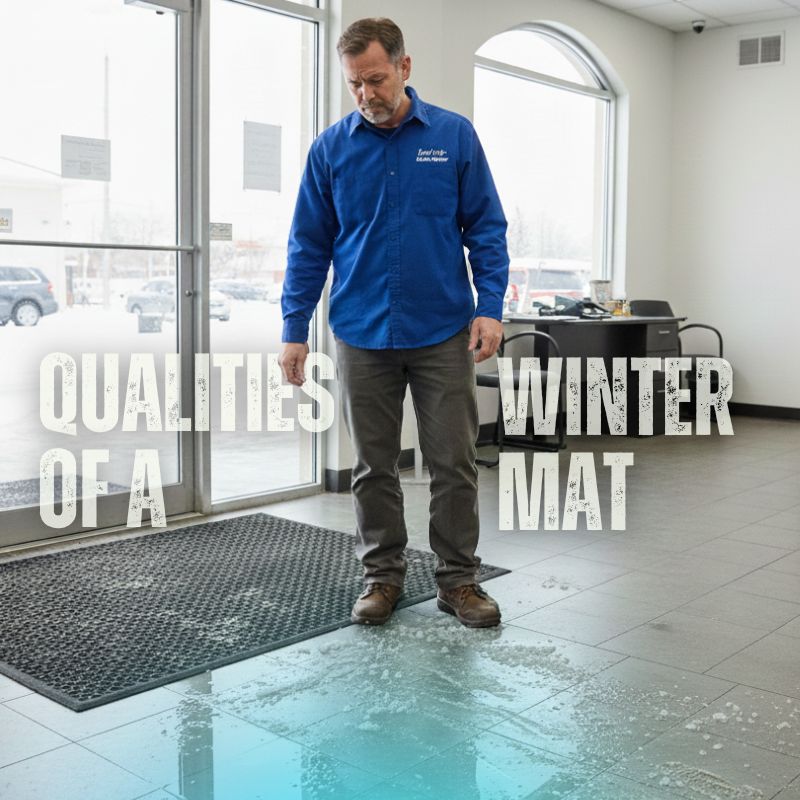
Features of a Winter-Ready Mat
When evaluating mats for winter conditions, performance matters more than the label. Key factors to consider include:
High absorbency: Handles large volumes of moisture without saturating.
Trapping ability: Scrapes and traps dirt and debris from shoes, not just absorbs moisture.
Stability: Remains in place and maintains shape, even when wet.
Appearance under traffic: Maintains a polished look and doesn’t become soggy or dirty quickly.
Quick dry-time: Designed to allow airflow and prevent moisture from pooling.
Correct length and step coverage: Contribute to the recommended coverage needed during winter of 25-30 feet of matting (roughly 10–12 steps). (CNA Insurance – Floor Mat Programs Guide)
Sequence and placement: For optimal performance, a Waterhog mat is best placed between a scraper and a classic mat, capturing residual dirt and moisture effectively.
Myth: A mat with a thick rubber backing or heavy-duty look automatically performs well in winter.
Fact: Thickness doesn’t guarantee performance. Winter performance requires a combination of absorbent surface fibres, water trapping design, stable backing, and proper drainage or containment.
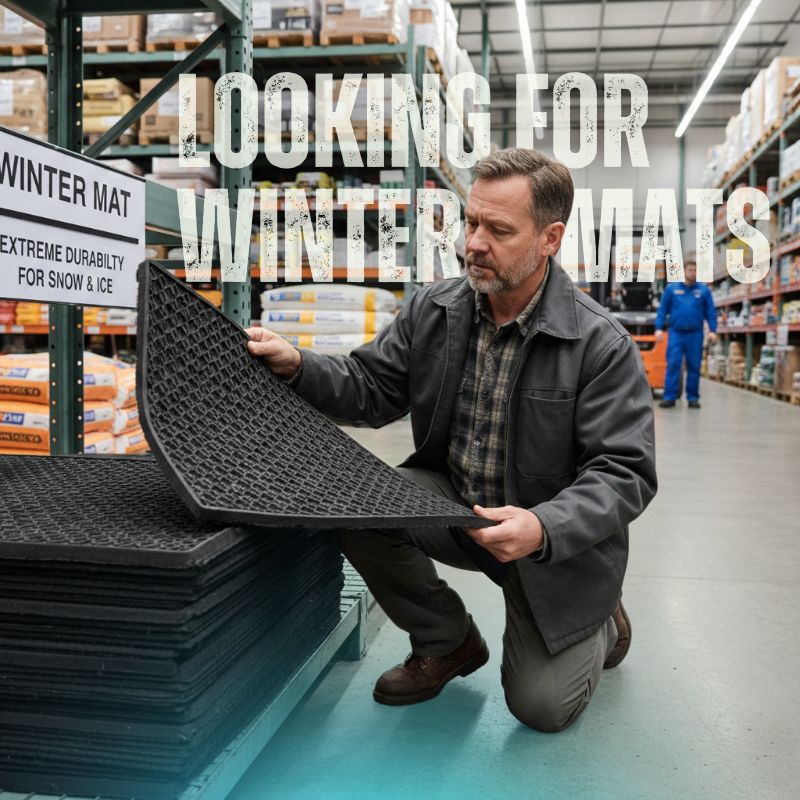
Questions to Consider When Looking for Winter Mats
When preparing your facility for winter conditions, consider these guiding questions:
Which areas see the most moisture or slush buildup? High-moisture zones help determine where mats are most effective and which entrances should be prioritized.
Are your mats sufficient in size and coverage? Adequate length and step coverage ensure dirt and moisture are trapped before reaching interior floors.
Does dirt or moisture accumulate over the week? Visible buildup or odours can indicate mats are reaching capacity or need more frequent maintenance.
How are mats maintained? Regular cleaning and professional care preserve mat performance and extend lifespan.
Are mats being replaced frequently? Frequent replacement may signal durability issues and the inconvenience of sourcing the same style repeatedly.
How is residual dirt managed? Even with a strong mat setup, some debris will inevitably make it inside. Having a plan for handling it helps keep floors safe, clean, and presentable.
A “winter” label alone does not define mat performance. What matters most is the combination of material quality, moisture-management capacity, and proper integration into a broader floor care strategy. By understanding the features that support winter conditions and maintaining your floors throughout the season, facilities can improve safety, preserve their professional image, and make smarter long-term decisions. For expert guidance on evaluating or optimizing your winter mat setup, our team is ready to help.
See the Quintex Uniform Repair App in action. In this video, we demonstrates how the app works and how it helps simplify the garment repair process for customers and our service team.
See how our Kannegiesser Revolution Machine cleans, dries, and re-rolls cloth towels, delivering a sustainable, efficient alternative to disposable paper hand towels.